
This monsoon, Madhusree and I, residents of a suburb in Faridabad, planned for a holiday in a small village farm of Sirohi in the district of Faridabad. It was a fairly large farm, perhaps a small holding in terms of the general sizes of agricultural land, having an area of 5 acres. Of this, half was for farming crops while the other half contained mostly a garden kept in the style of a forest with a tiny dwelling unit in one corner of it. Amidst this forest was an even tinier structure in the form of a wooden cottage, modelled like a caravan. The cottage was called Tempe Tintin and was part of a series of similar cottages across many places in the Deccan, all named after the various characters in children’s comics. These projects were created by an artist cum architect staying in Bangalore.
It was a quiet place since the property is leased out to a single party, often solo travellers. We found the cottage cramped, most probably due to our girth. Covered by a canopy of trees, the cottage has a natural sit-out area where the interlocking crowns of the trees protect you from rain and the sun. This being Faridabad, the power cuts are so frequent that we discussed that the property may soon have to wind up because guests would want the fridge, the air conditioner and the geyser. The interior of the cottage was arranged artistically and the design aspects of the structure impeccable. Food is served on the property, homemade daal, sabzi and roti – simple, sumptuous and familiar.
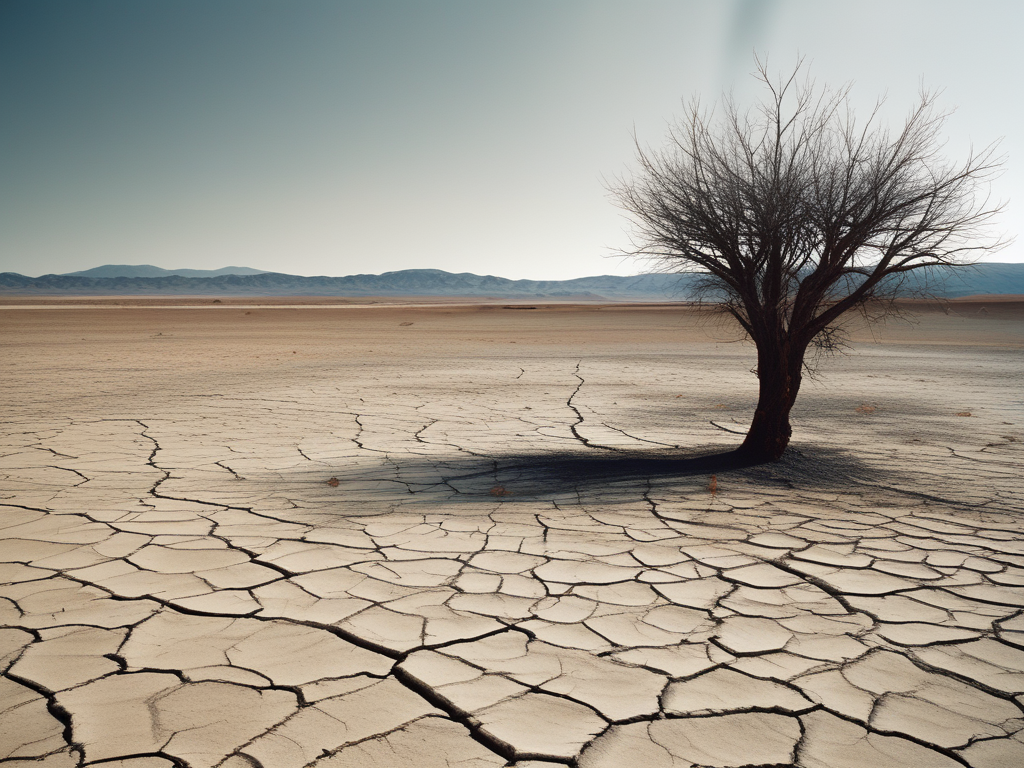
But the eyesore was the vacant land bereft of crops, dry and parched stretching from the forest to the boundary wall of the property. We asked the caretaker, why so much of the land was left unused by the owner? The caretaker said that it was difficult to grow crops here because villagers come at night to vandalize and pillage the crops. They also steal TV sets, cookware and utensils from the farm owners. It was because of the menace of the villagers that these farm owners, for whatever may their land sizes be, left lands uncultivated. The lands were purchased by the landowners, the rich urban professionals from the local land mafia. The inhabitants of Haryana are mostly the Gujjars who have been nomadic and not always held firm titles of land ownership. Land alienation among the Gujjars often goes unnoticed. Yet because they have been herdsmen, even when not migrating, they always have needed access to land. Land was now owned and fenced off, cutting off the core of their existence, namely movement. It is not always the farmlands but public commons such as the Surajkund complex, totally fenced off, large apartment complexes with complicated technologies as security measures have alienated the local people by blocking them off abruptly from their histories, their ethnic genes. No wonder then Haryana is the den not only of social conservatism but also of petty crimes used as weapons of the weak.
The large tribal population of Haryana and the absence of a middle-class intelligentsia except a small section of professionals but without any command over technology of production, has created a social hiatus in which organic solidarity can hardly be achieved. The Haryanvi society suffers from a lack of purpose because the social strata are unconnected with one another, enjoy no relationship of exchange or reciprocity of obligations. This is why, land is so easily alienated for purposes other than to expand or intensify agriculture. The Farmers’ Bill was targeted to disarm the larger farmers of the state, the stripping off of power of the big landholders was supposed to elate the landless nomads.
Land erosion then is a deep matter; it is the function of history, ethnic composition, absence of social cohesion and most of all, of politics which, has no protection for the tribal people, if they are not included in the list of the Scheduled Tribes. It is land alienation and the secret revolt of the weak that is the root cause of soil erosion, for even when we know how to prevent it through planting crops, crop rotation and similar interventions, the social and political set up of the societies, its deep inequalities, the disconnect between the haves and have nots, the loss of land for people and the loss of land used for livelihood for people lead to soil degeneration and soil loss. The sociological dimension is perhaps the cornerstone of the problem of soil loss.


 Secondsaturn's Blog